
St. John’s Episcopal Church and Cemetery on Montauk Highway in Oakdale, is one of Long Island’s oldest churches. Built in 1765, it served as a British hospital during the American Revolution and was designated a 250th Anniversary Site by the Long Island Chapter of the Sons of the American Revolution during the summer of 2026.
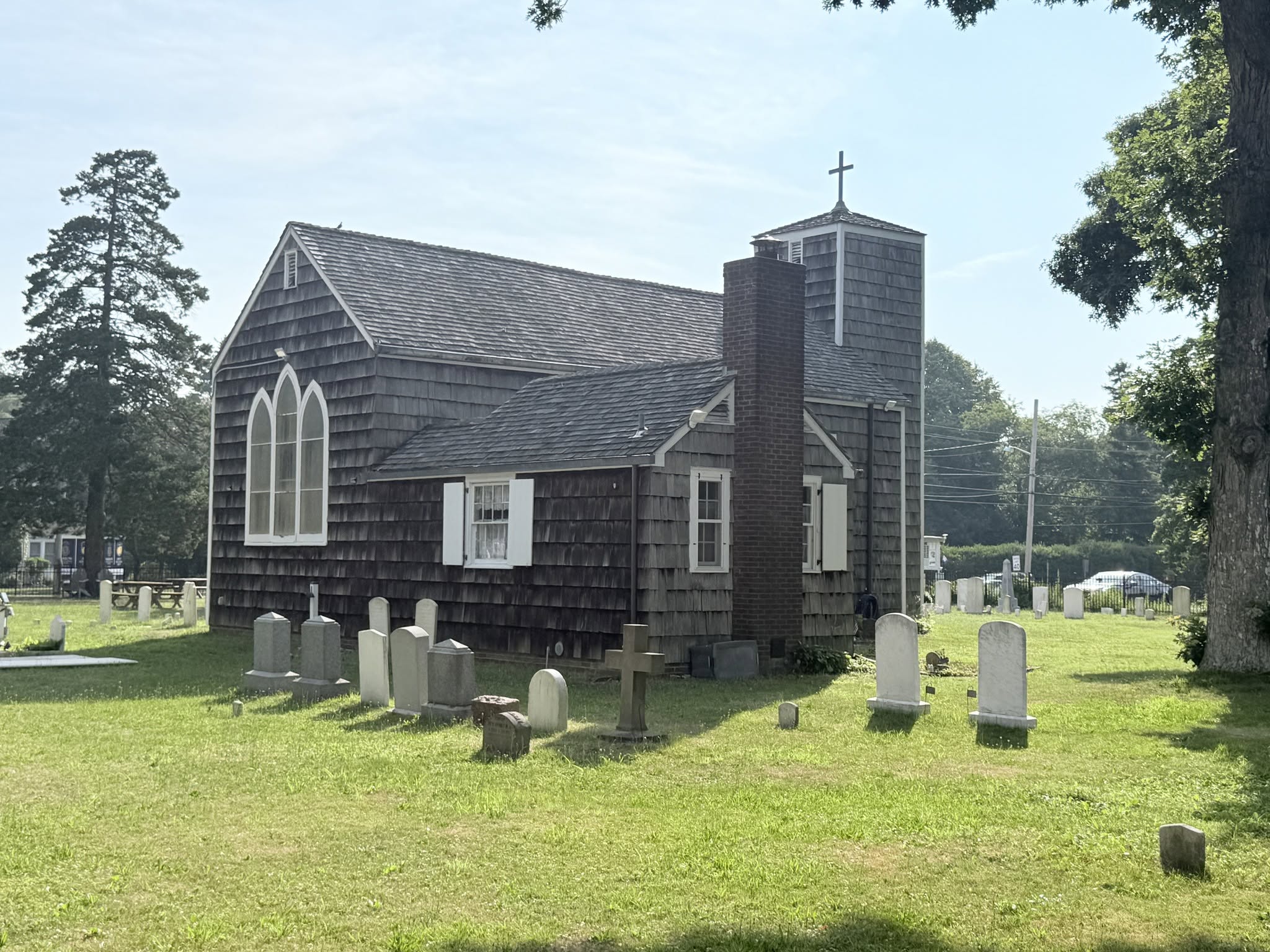
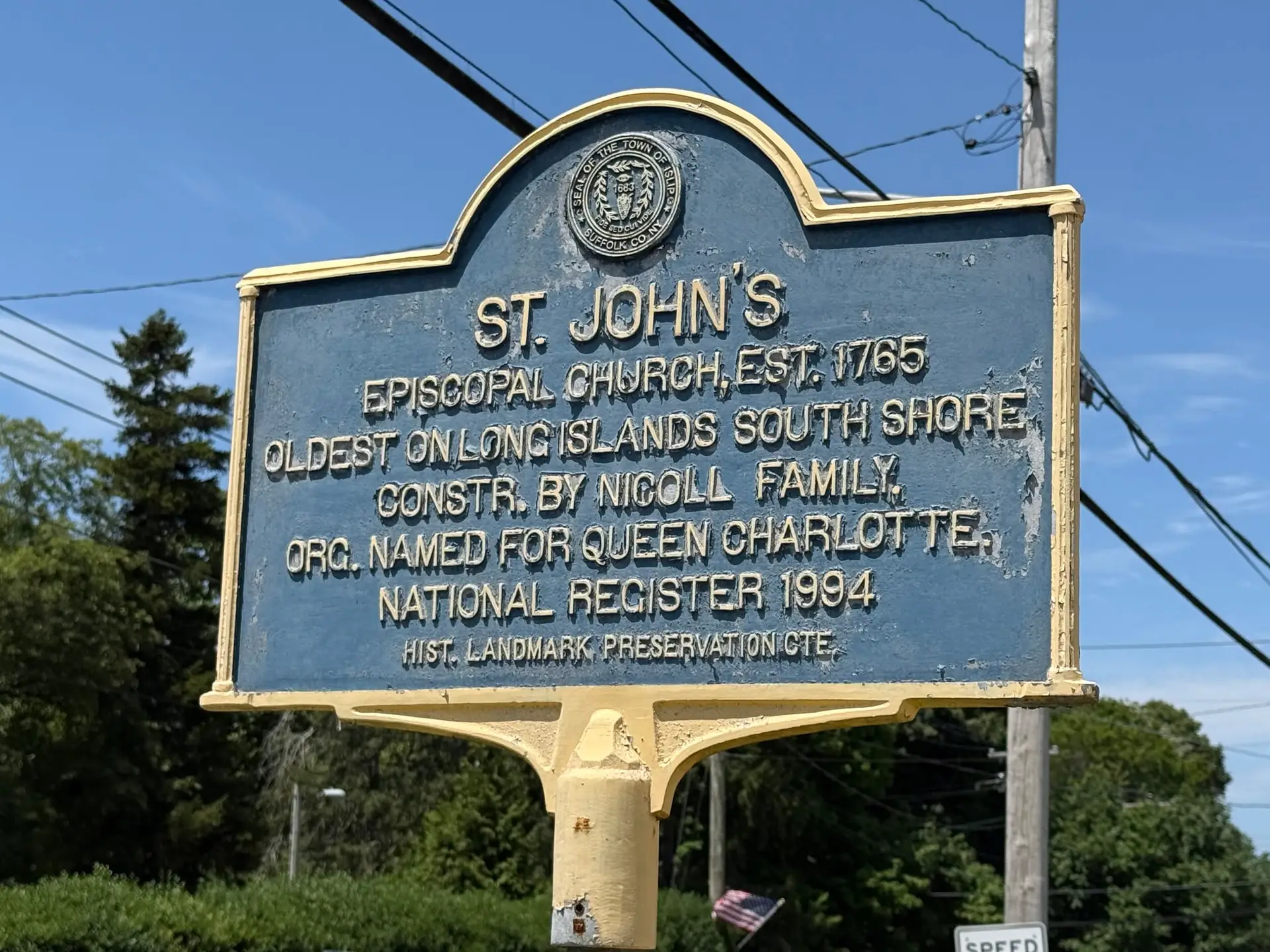
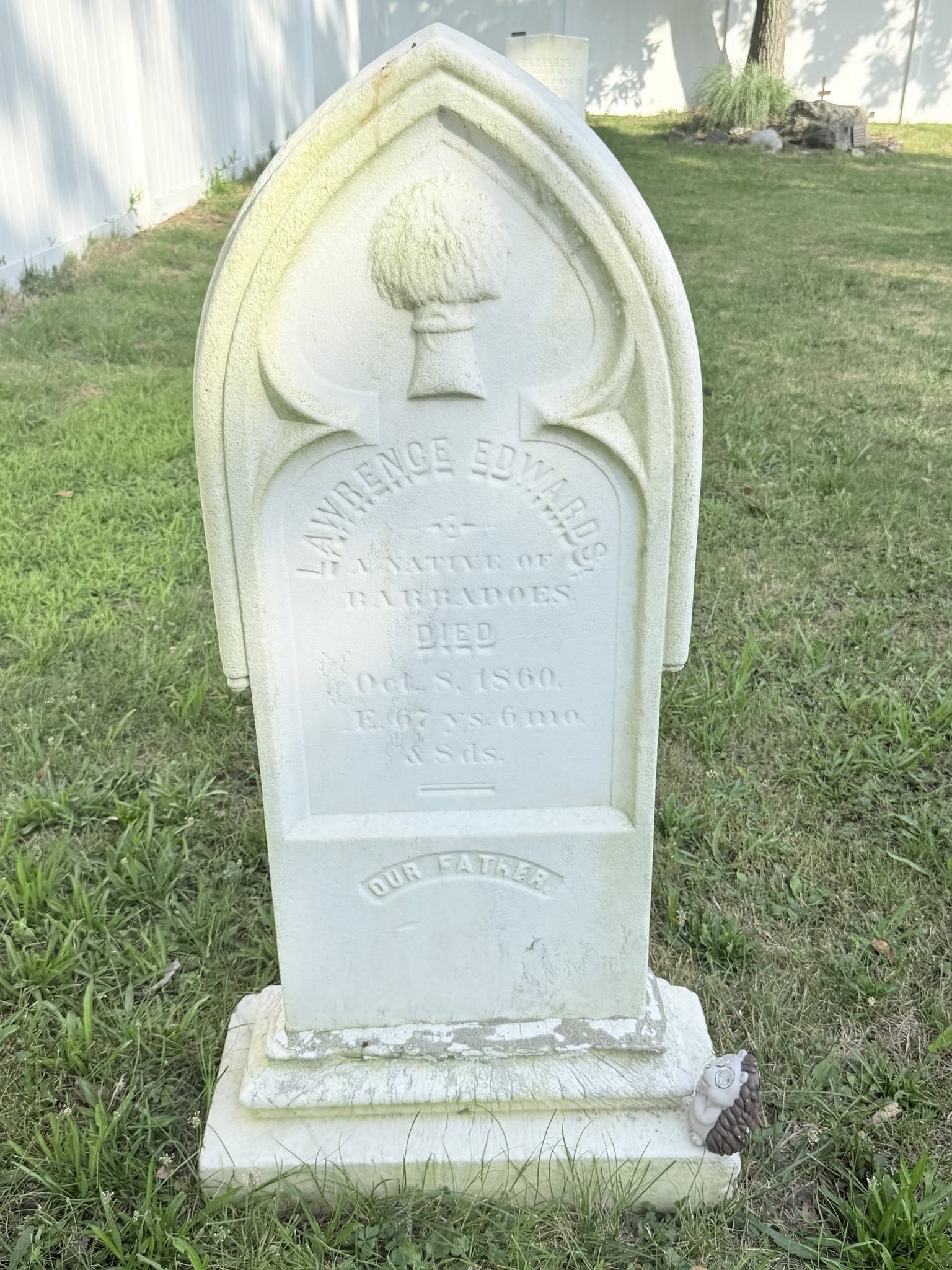
During my visit, I immediately recognized several surnames from my Langdon family research. Among the gravestones were members of the Seaman, Seabury, Smith and Snedecor (also spelled Snedeker) families, along with the uncommon male given name Eliphalet, which also appears in my family tree. (My mother went to school with Nalda Snedeker in Baldwin.) Other names in the cemetery are: Ludlow, Wentworth, Frick, Davis, and Nicolls.
The churchyard is charming. There are roughly 80 historic grave markers, and I photographed most of them, from weathered eighteenth-century stones and impressive marble ledger stones to family monuments and Civil War memorials. One of the highlights was seeing the Ludlow family ledger stones. The Ludlows were one of Long Island’s prominent early families, and their horizontal marble ledger stones reflect the status and craftsmanship of the period.
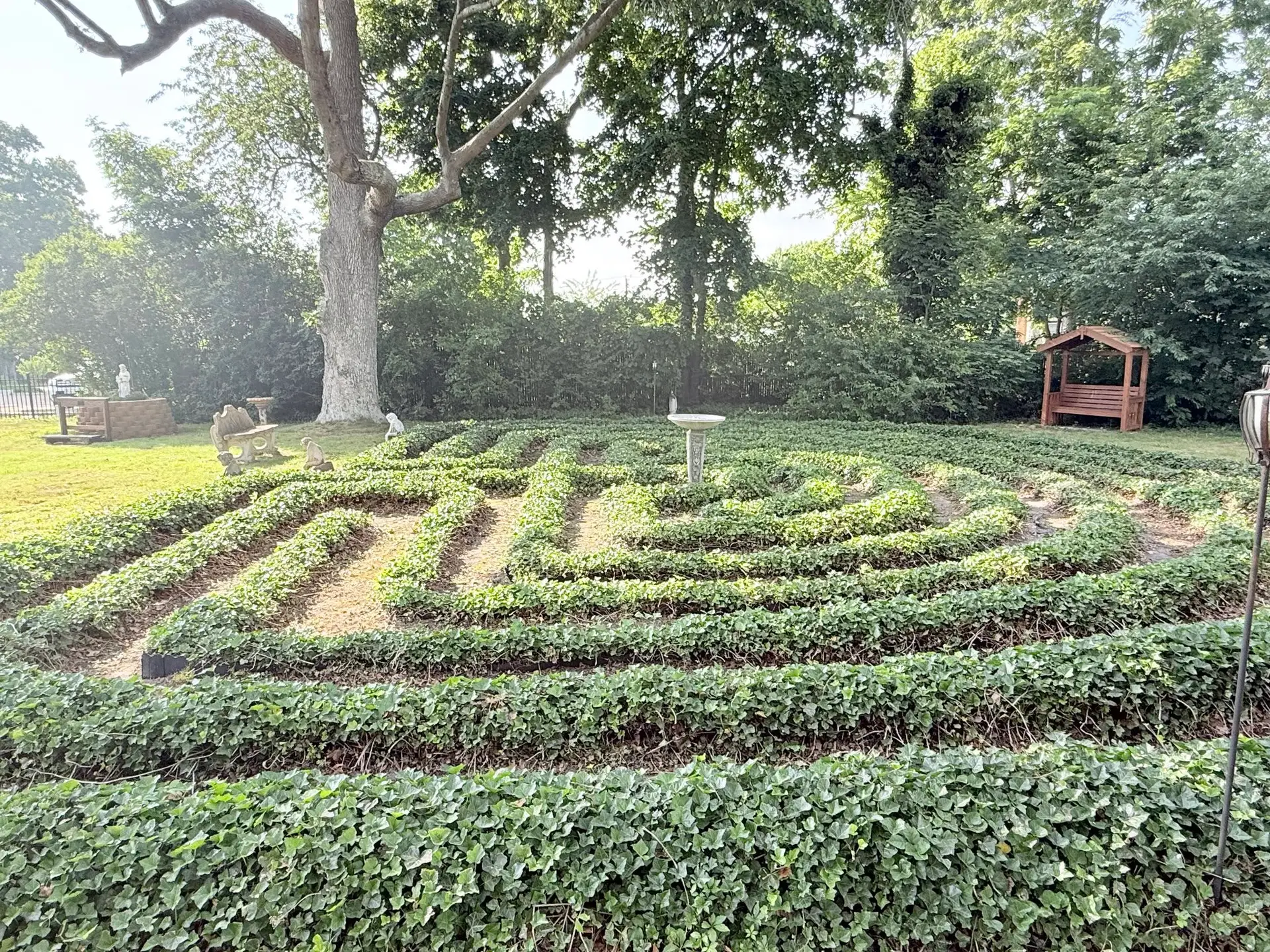
The grounds are lovingly cared for, with benches, a gazebo, a labyrinth and angel statues tucked among the ivy. Several graves have been adopted by volunteers who help preserve this remarkable piece of Long Island history.
Before leaving, I noticed a broken gravestone. Only the bottom half remained:
“Short was my stay with you below,
Sooner or later all must go.”
ONE MORE STONE CAUGHT MY ATTENTION…
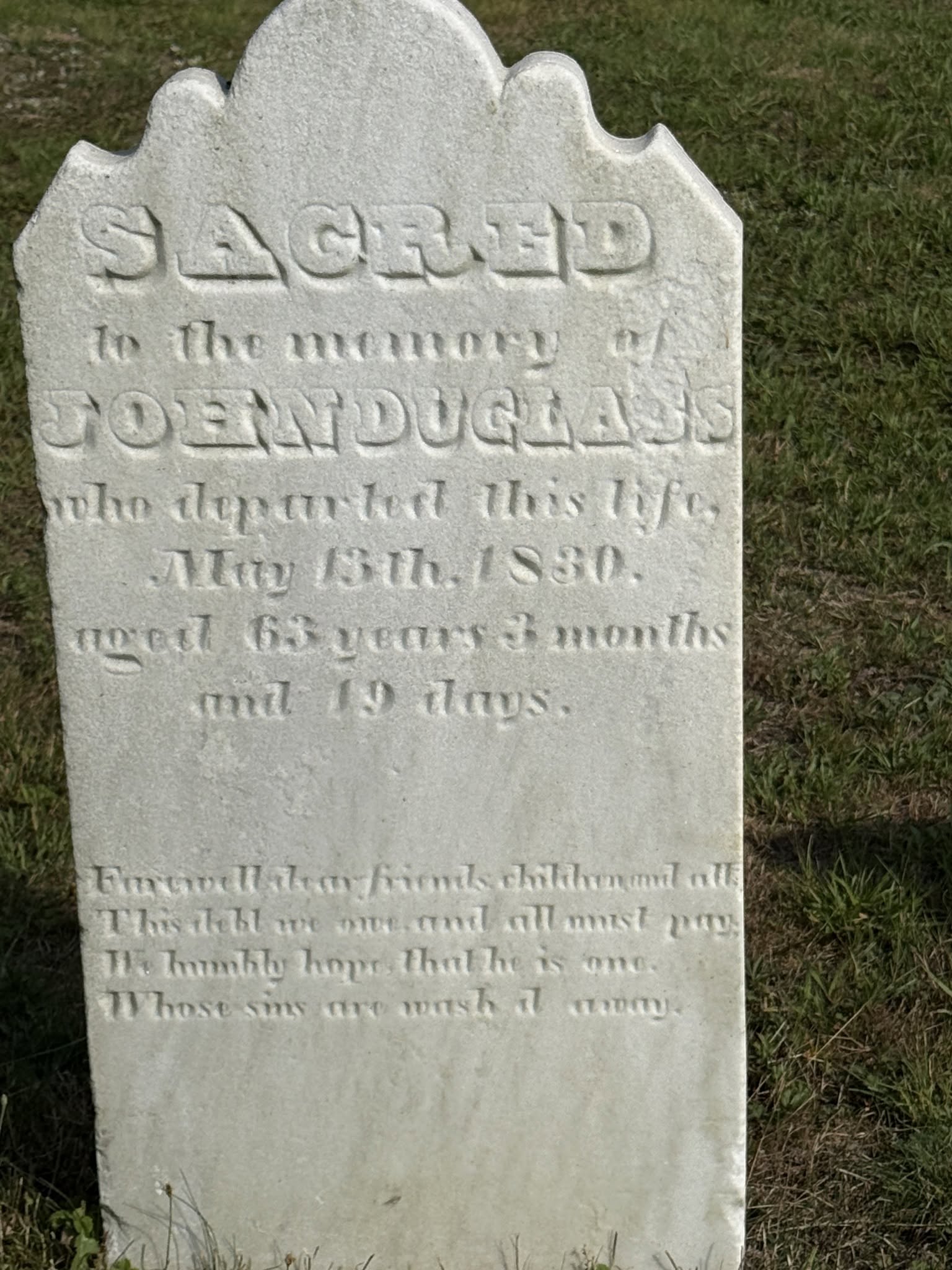
SACRED
to the memory of
JOHN DUGLASS
who departed this life
May 13th, 1830.
aged 63 years 3 months
and 19 days.
Farewell dear friends, children and all,
This debt we owe and all must pay.
We humbly hope that he is one
Whose sins are washed away.
After visiting more than 20 historic cemeteries and burial grounds across Long Island, this is the first time I have encountered the surname “Duglass.” Today, the surname is more commonly spelled as Douglas or Douglass, but in the late 18th and early 19th centuries spelling was often fluid.
Names frequently appeared in different forms depending on who recorded them, and even members of the same family sometimes used different spellings during their lifetimes. As an historian, I record every name exactly as it appears on the gravestone. The inscription is the historical record. My job is to preserve the evidence first and determine later whether the family later adopted a different spelling or whether Duglass represents a distinct family line.
“LIFE IS LIVED FORWARD BUT BEST UNDERSTOOD BACKWARD.” – Rita Langdon, PhD
Return to the Long Island Cemeteries Collection.