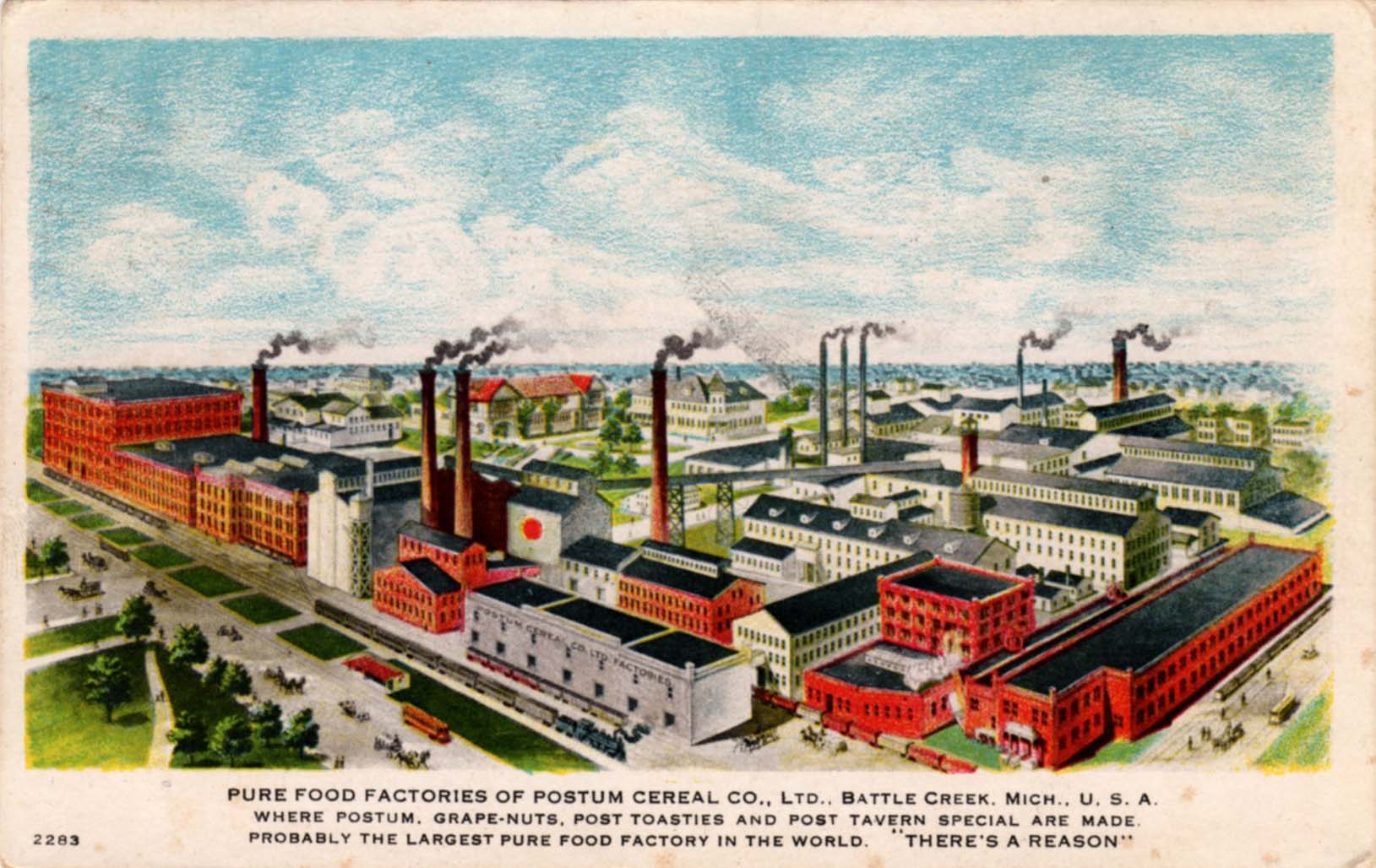
The Postum Cereal Company in Battle Creek, Michigan
What began in a small Battle Creek barn in 1895 grew into a cereal empire that transformed the American breakfast table and laid the foundation for one of the world's largest food companies. Building on the success of Postum, C.W. Post introduced Grape-Nuts and Post Toasties, pioneering a new industry and helping establish Battle Creek as the breakfast cereal capital of America. The company's innovative products, manufacturing operations, and groundbreaking advertising campaigns changed the way food was produced, marketed, and consumed throughout the 19th and 20th centuries.
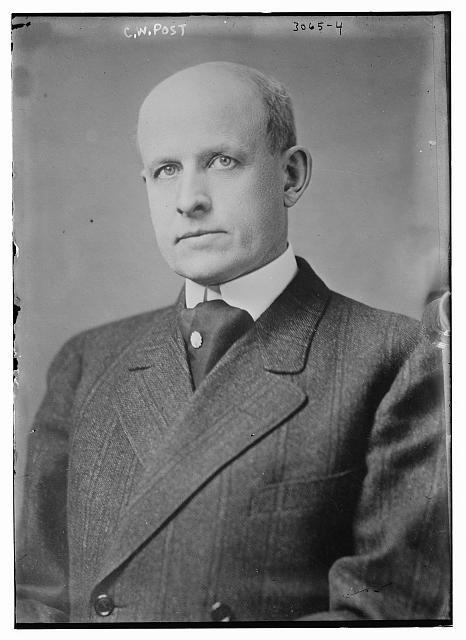
C.W. Post: Cereal Inventor
Charles William Post (1854–1914) was one of America's most influential entrepreneurs, best known for founding the Postum Cereal Company and helping create the modern breakfast cereal industry. An inventor, marketer, and visionary businessman, Post transformed American eating habits and built a business empire whose legacy continues to influence food, advertising, and popular culture today.
Architecture
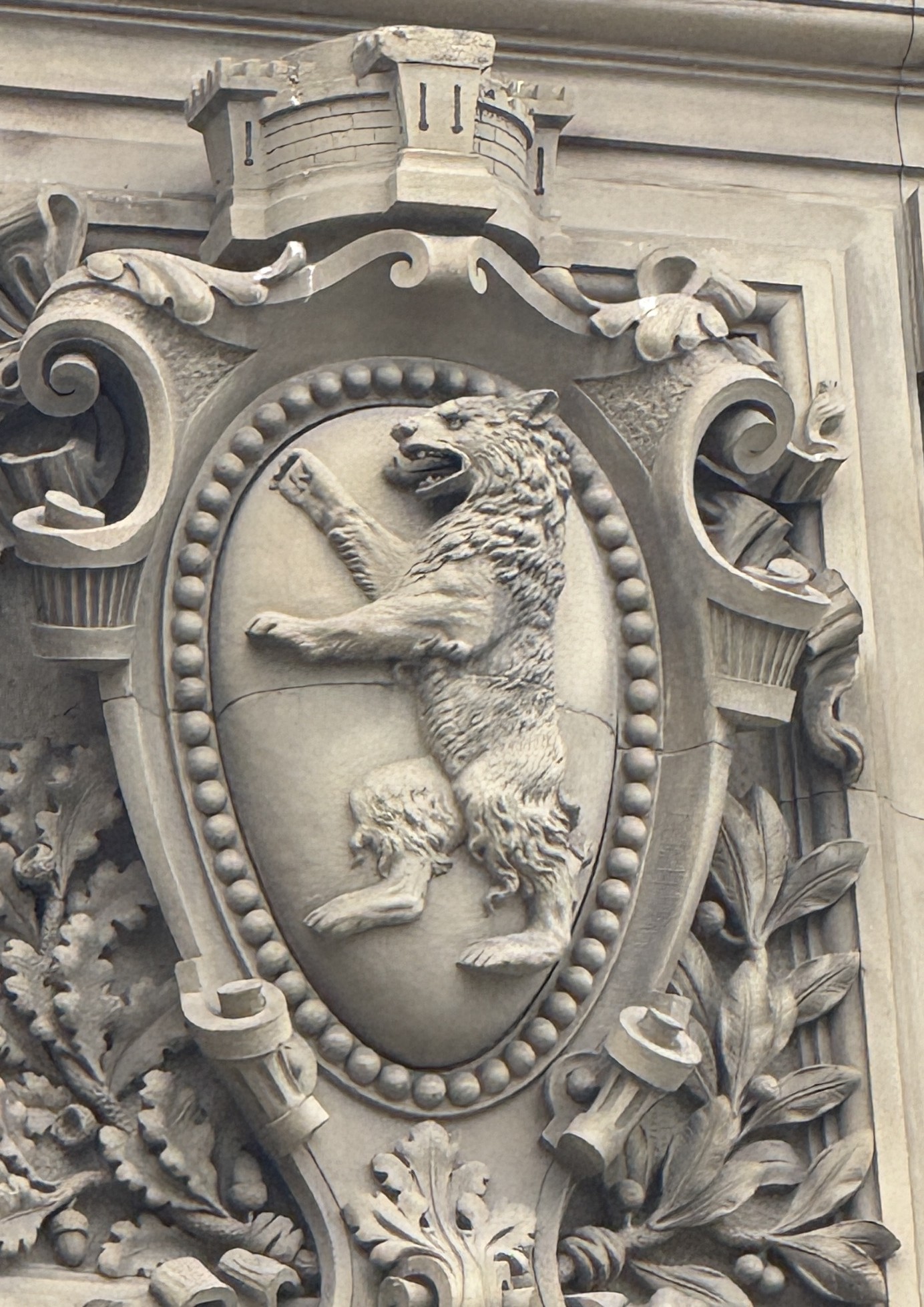
From stone lions and carved faces to hidden symbols and decorative details, architecture tells stories that often go unnoticed. This collection explores the artistry, craftsmanship, and history behind the buildings, monuments, and architectural features I have encountered throughout my research and travels. Photo taken in Germany: The Rampant Lion is the world-wide symbol of strength and courage.
Long Island University, Brooklyn
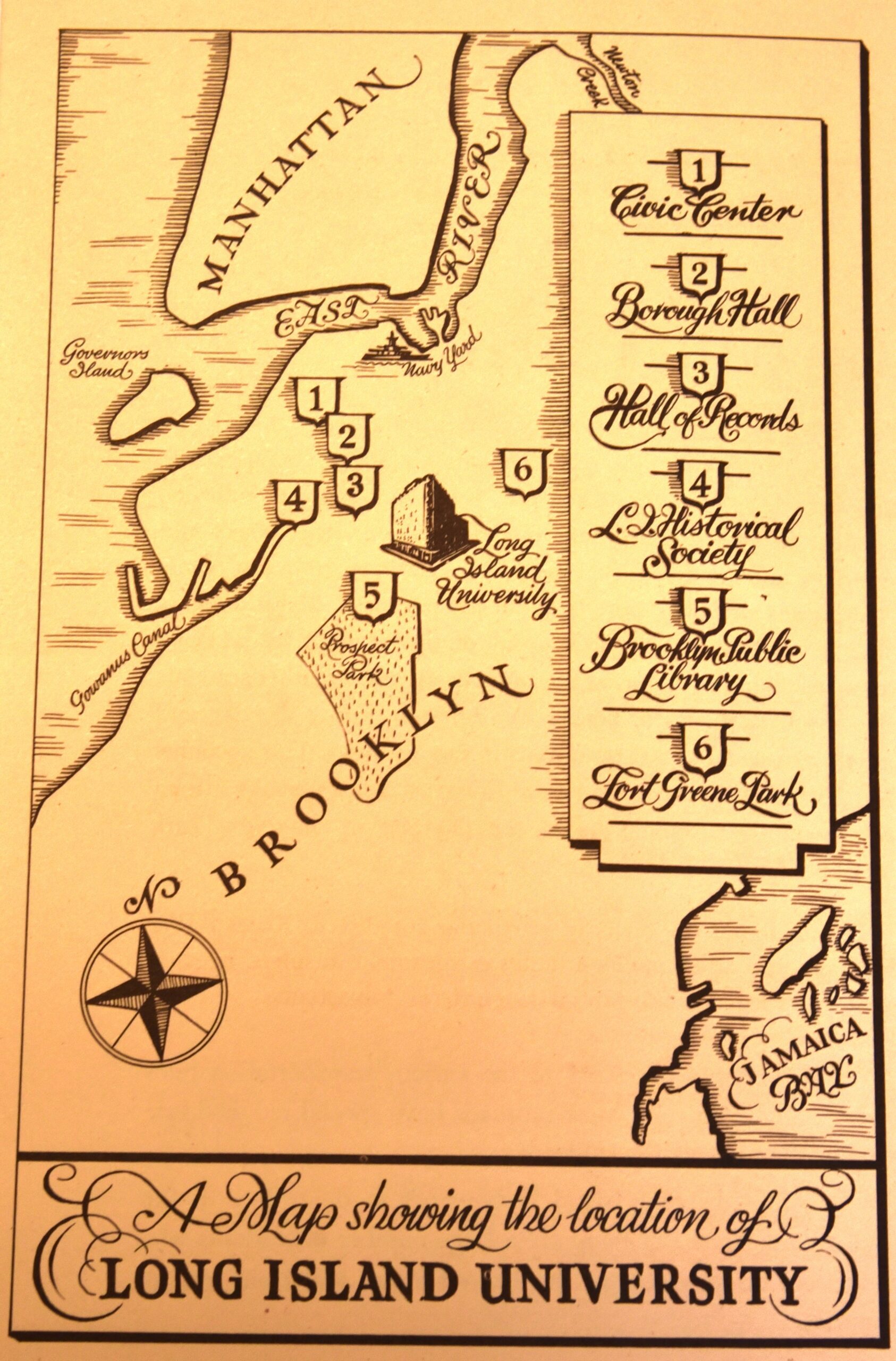
An early 1940s Long Island University admissions brochure proudly proclaimed that "somewhere in your immediate neighborhood is a Long Island University man." According to the brochure, "He may be your dentist, or your family doctor. He may be a local merchant, of a pharmacist, or the man who fits your glasses. He may even be the principal of your high school. This collection explores the founding and early history of Long Island University, established in Brooklyn in 1926. Through photographs, publications, maps, advertisements, and other historical materials, it traces the growth of a young private institution that survived financial hardship during World War II and grew into one of the nation's largest private universities. And yes, Brooklyn is on Long Island.
From Patient to Pioneer: The Birth of Postum
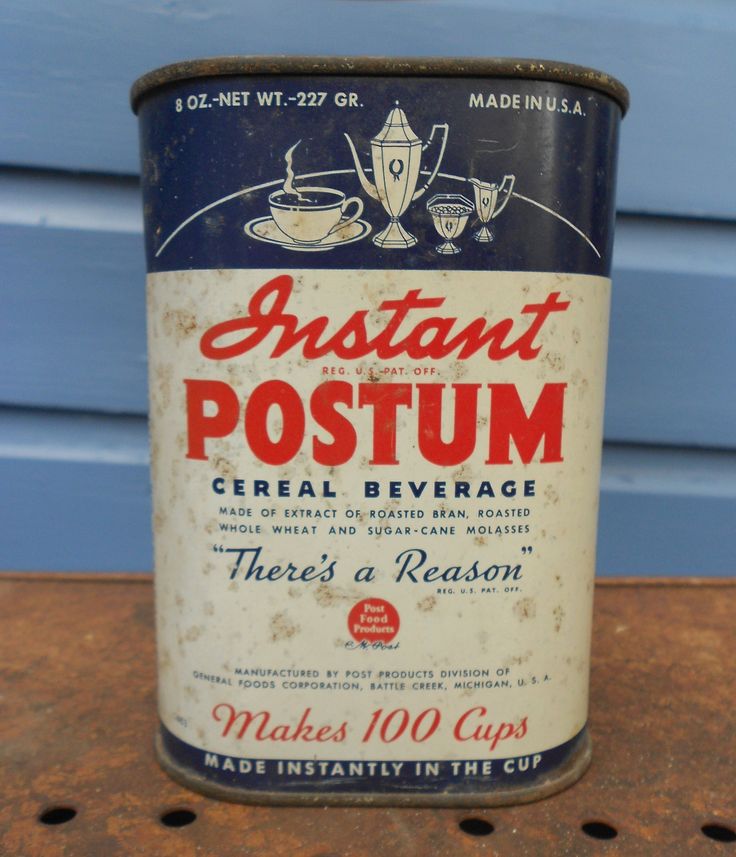
Before he became one of America's most successful entrepreneurs, C.W. Post was a patient searching for answers. While recuperating at the sanitarium founded by Dr. John Harvey Kellogg in Battle Creek, Michigan, Post developed a deep interest in health, diet, and nutrition. That interest led him to create Postum in 1895, the world's first widely marketed decaffeinated coffee substitute. Marketed as a healthier alternative to coffee, Postum promised freedom from the nervousness and sleeplessness often blamed on caffeine and quickly gained a devoted following. What began in a modest barn evolved into a cereal empire that helped redefine how Americans ate breakfast.
C.W. Post College of Long Island University, Brookville & Old Westbury, NY
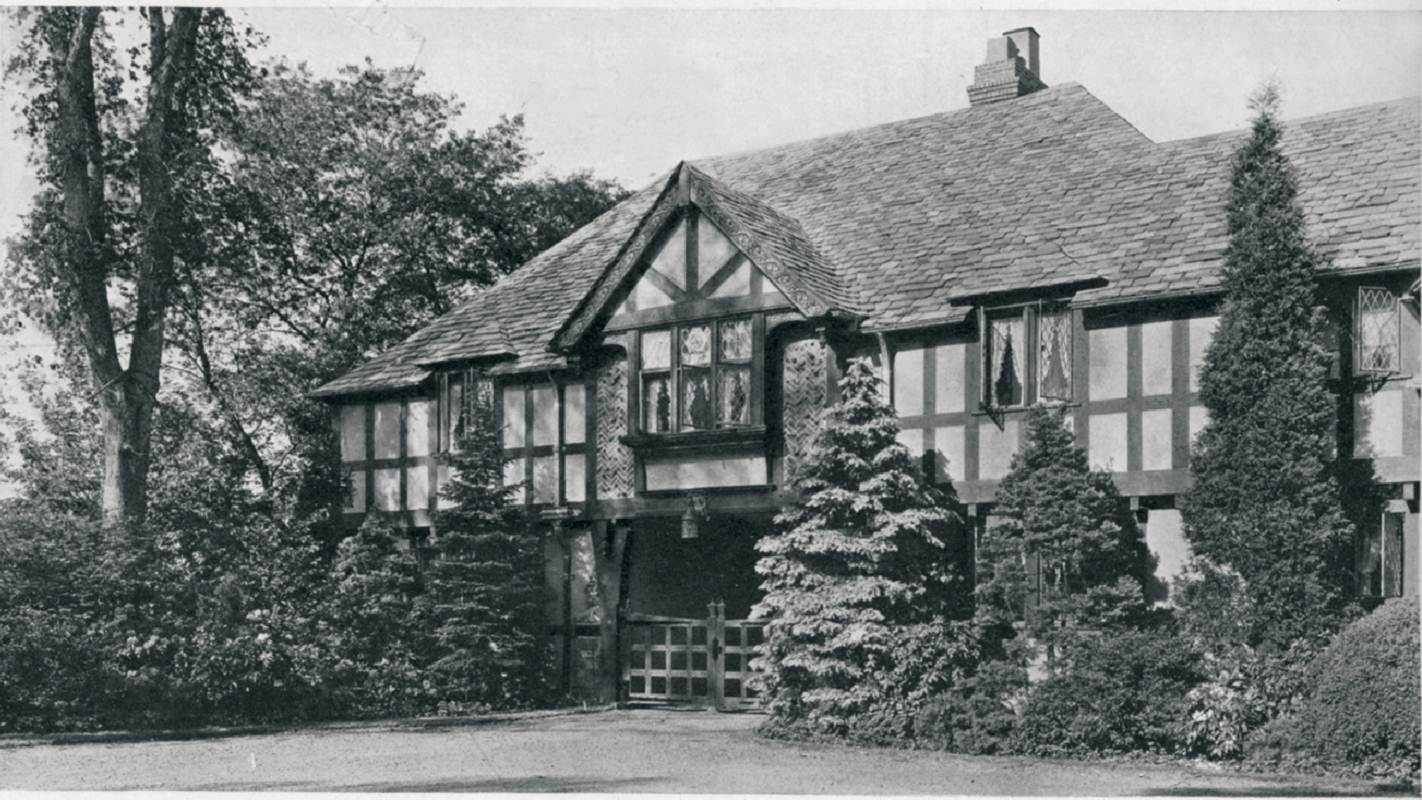
Few university campuses possess a history as rich and layered as the C.W. Post Campus of Long Island University. Originally the 178-acre estate of cereal heiress Marjorie Merriweather Post and home to E.F. Hutton and Ambassador Joseph E. Davies, the property welcomed presidents, governors, diplomats, royalty, entertainers, and business leaders long before it became a university in 1954. This collection explores the people, architecture, landscapes, monuments, traditions, and stories that shaped the campus, drawing upon decades of original research, rare photographs, documents, and interviews. Today, the 320-acre LIU Post campus spans two historic villages: the Village of Brookville and Village of Old Westbury. Editor's Note: This collection represents only a portion of the research I have conducted on the Post estate and the early history of C.W. Post College. Additional findings will be published in a forthcoming book tentatively titled "Pioneering College: The History of LIU Post 1920-2019."
U.S. Presidents
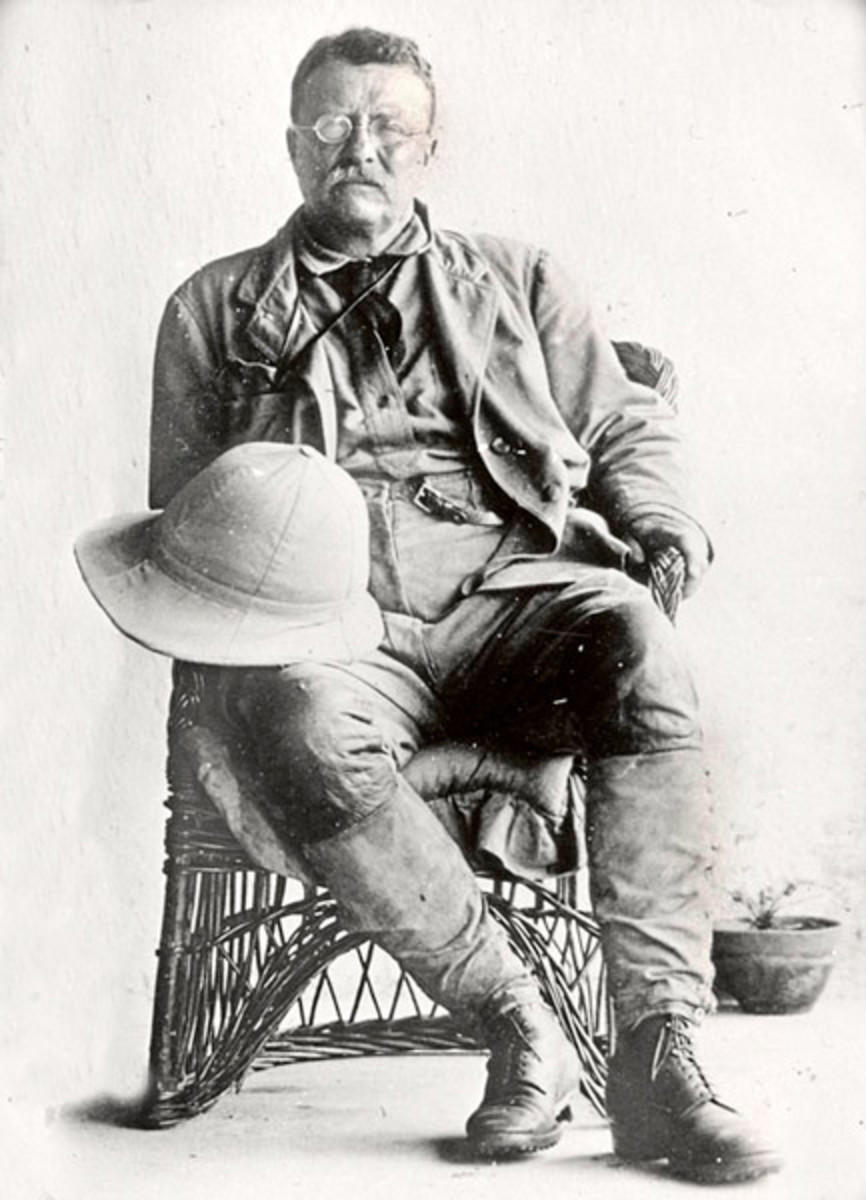
From Theodore Roosevelt to Richard Nixon, American presidents have been a recurring theme throughout my research and travels. Through archival work, historic sites, lectures, and conversations with presidential scholars and descendants, I have developed a deep appreciation for the individuals who have occupied the nation's highest office and the lasting impact they have had on American history.
E.F. Hutton & Dina Merrill
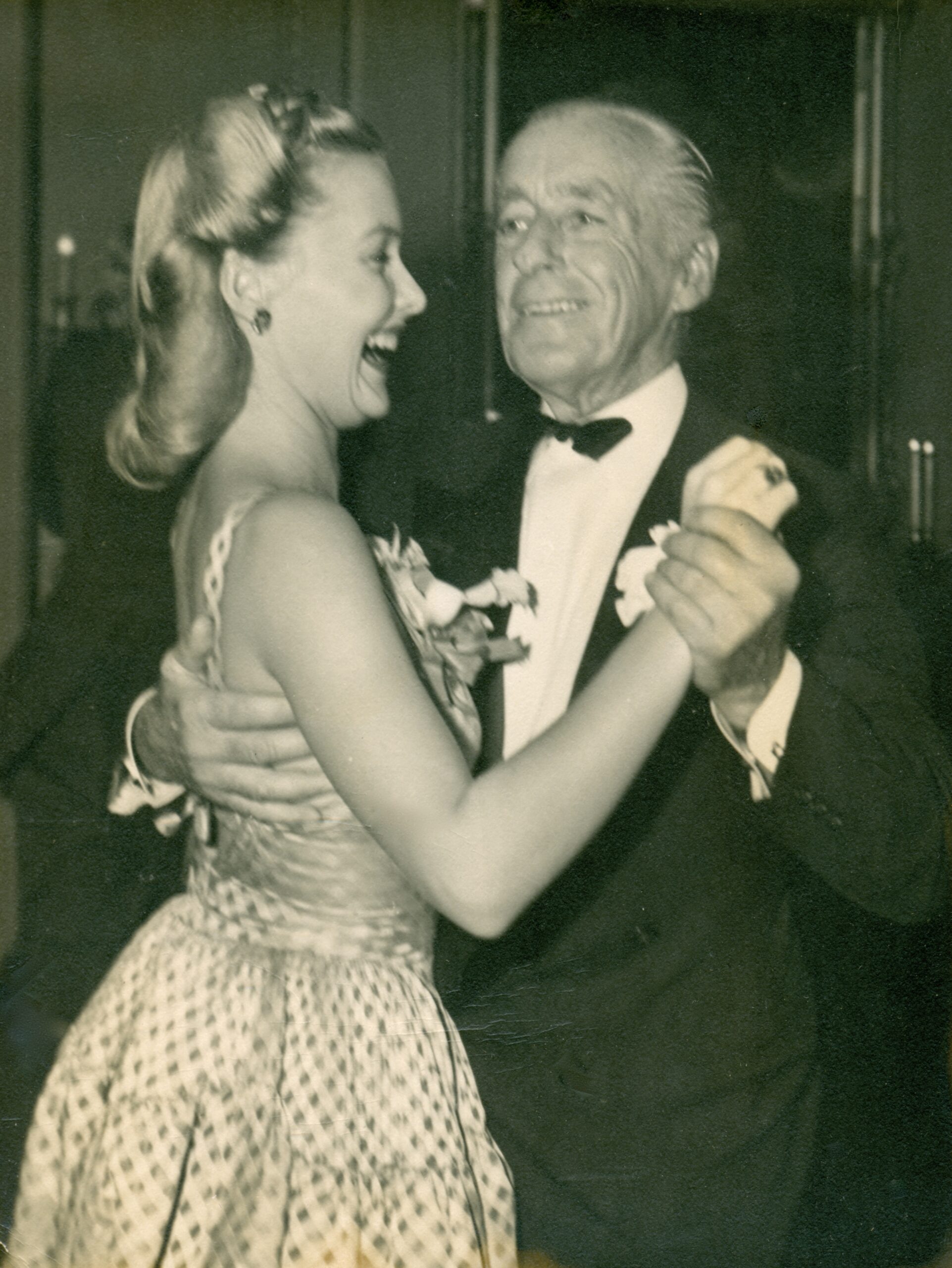
This photograph captures financier E. F. Hutton and his daughter Nedenia Hutton, who later achieved fame as actress Dina Merrill. Hutton built one of the nation's most influential brokerage firms and became a central figure in American finance during the early twentieth century. His marriage to Marjorie Merriweather Post united two of America's most recognizable fortunes.
Cemeteries: Stories in Stone
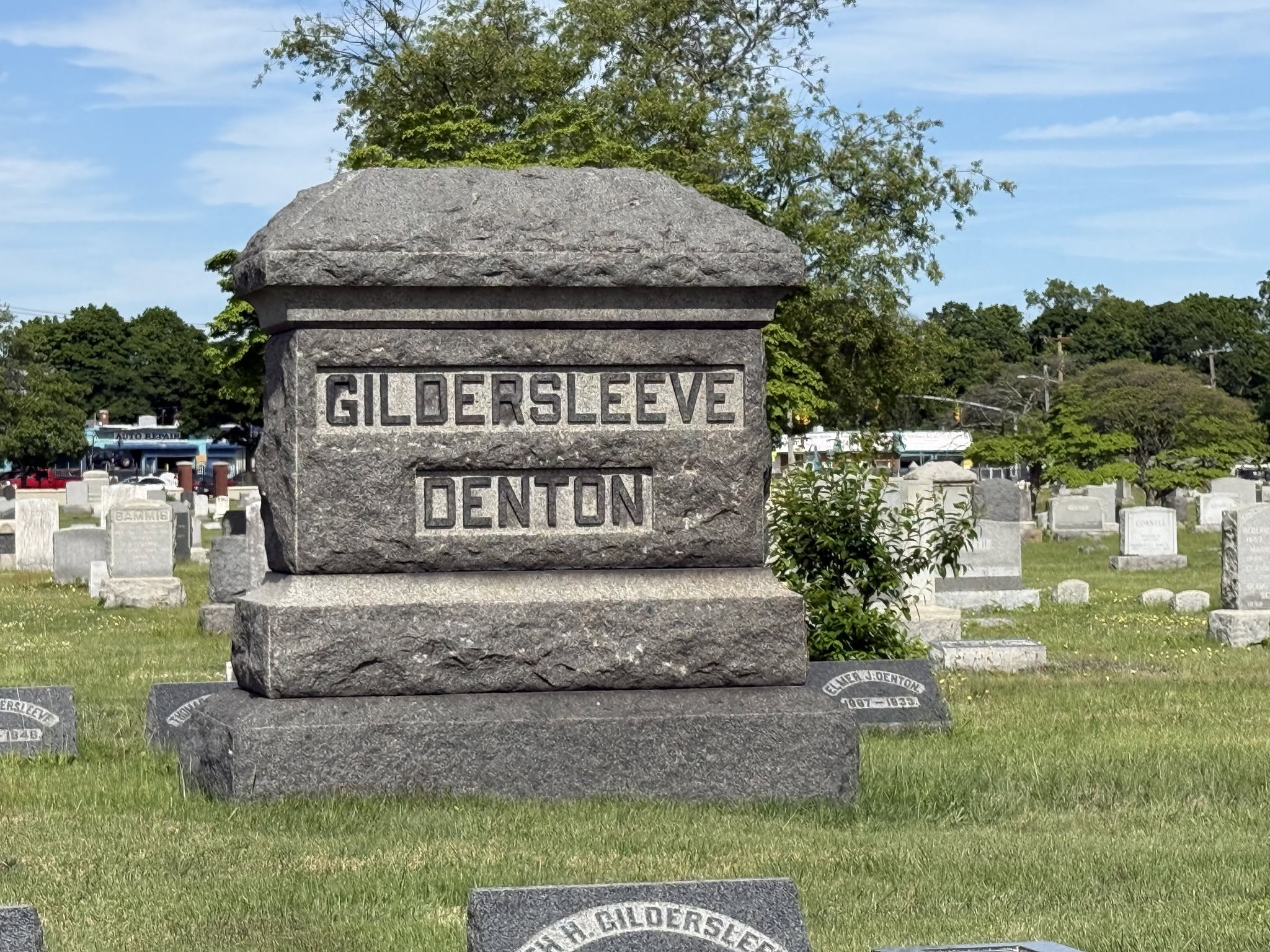
Long after newspapers have faded and memories have been lost, cemeteries continue to speak. Their stones preserve names, dates, symbols, and clues that help reconstruct the lives of those who built our communities. This collection explores the fascinating stories, hidden histories, and enduring legacies carved in stone at Long Island burial grounds.
Marjorie Merriweather Post
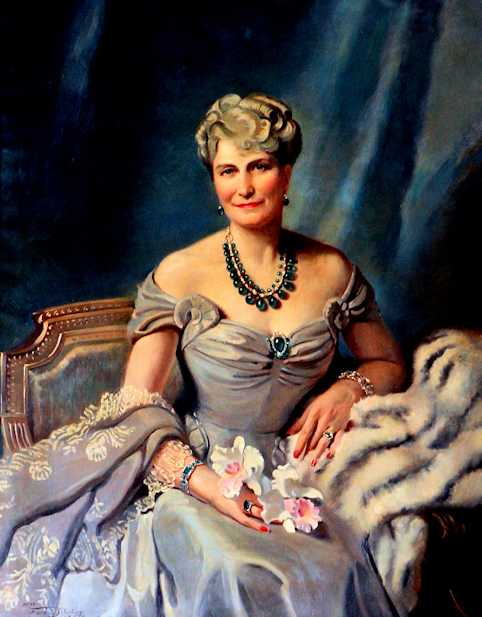
More than a socialite and philanthropist, Marjorie Merriweather Post was a visionary business leader. After inheriting her father's Postum Cereal Company in 1914, she helped build it into General Foods, one of the world's largest food corporations. Her willingness to embrace new ideas, including Clarence Birdseye's pioneering frozen-food technology, reshaped the American food industry and secured her place among the most remarkable businesswomen of the twentieth century.
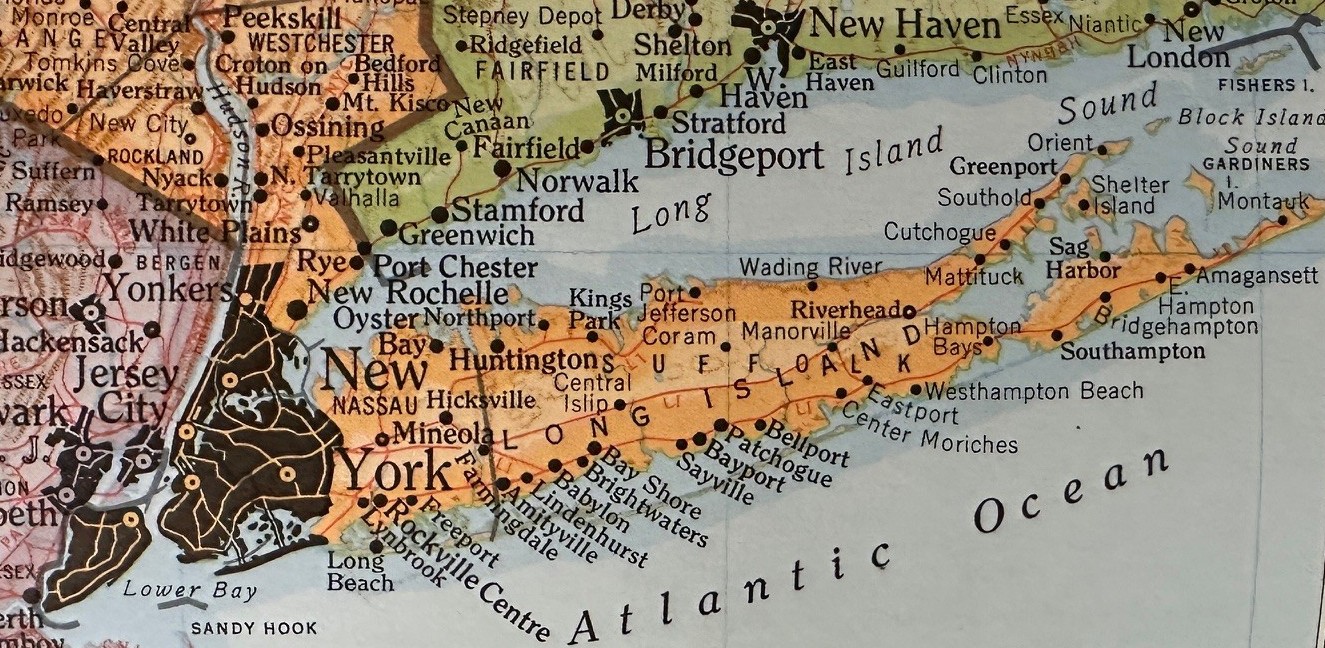
I Love Long Island
Long Island's story is written in its cemeteries, landmarks, historic buildings, military memorials, neighborhoods, and the lives of the people who shaped them. Explore the places, artifacts, and forgotten stories that help tell the history of Long Island across more than three centuries.
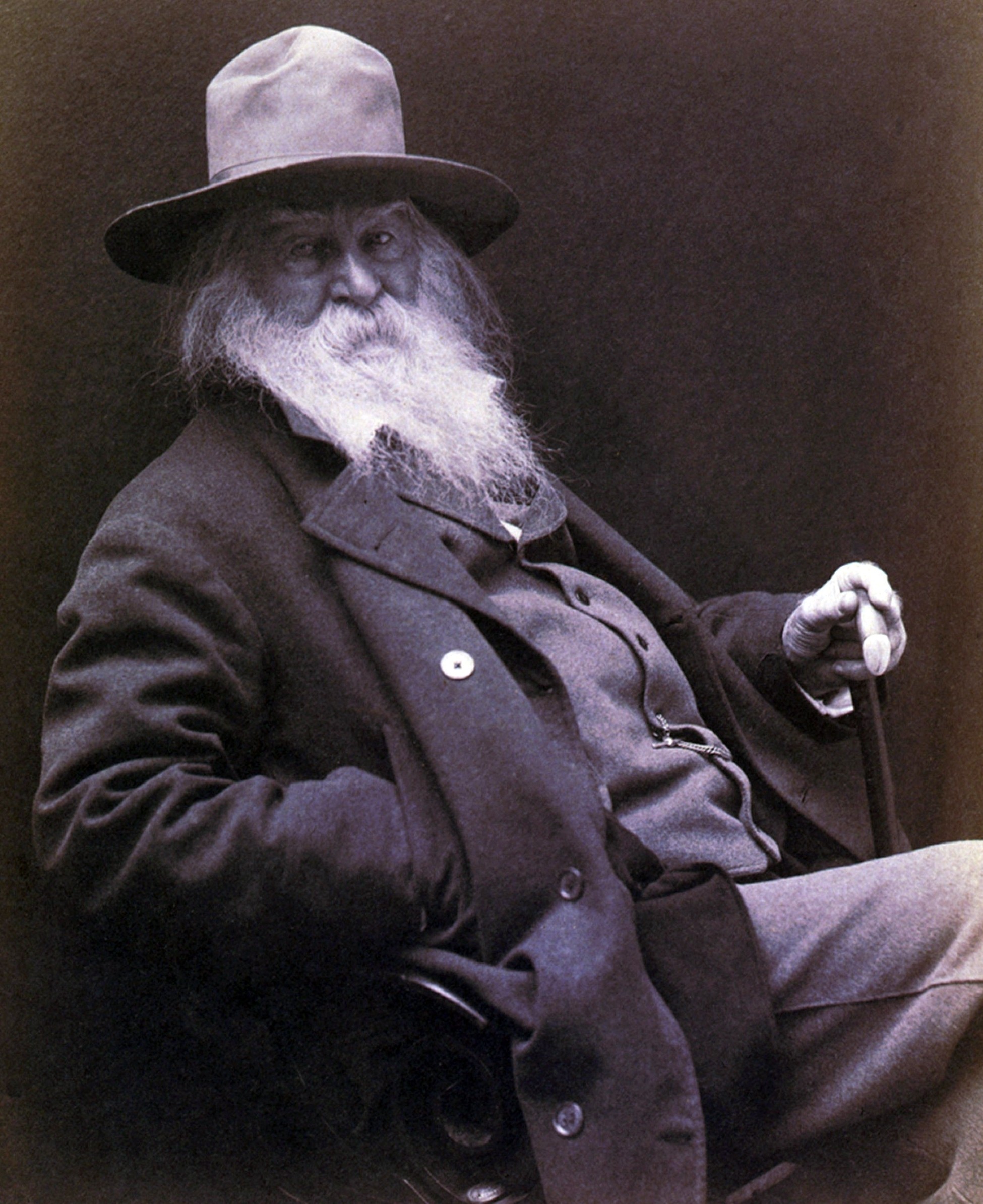
Walt Whitman
Poet, journalist, teacher, and founder of the Huntington Long Islander, Walt Whitman remains one of Long Island's most influential literary figures. As a former reporter for Whitman's newspaper, I have long been drawn to his life and work, an interest that inspired the creation of a Walt Whitman Room at Long Island University featuring portraits by artist Dan Christoffel.
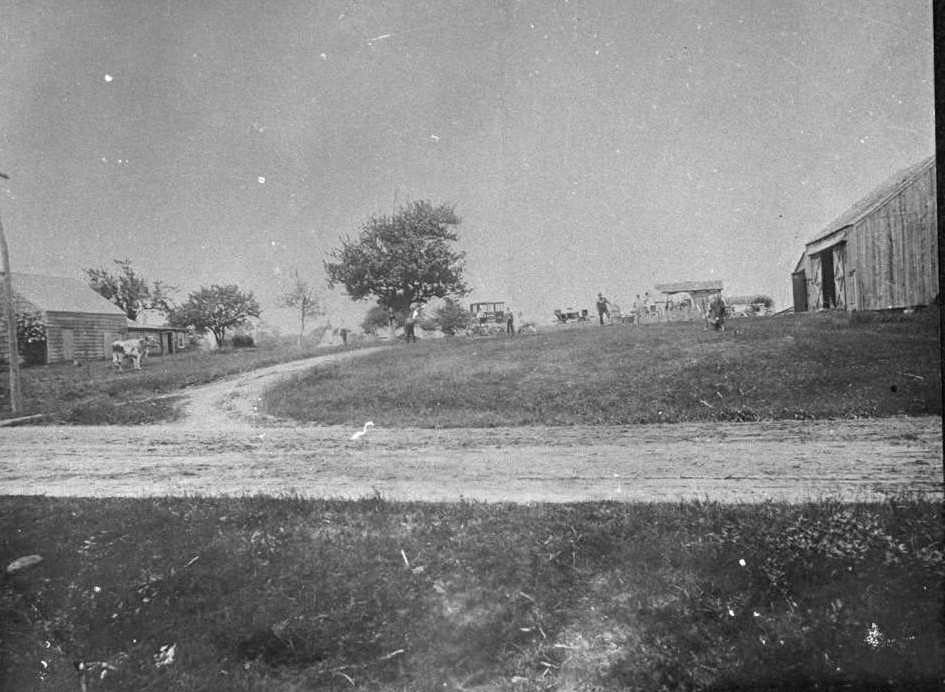
The Families Who Built the Town of Hempstead, Long Island
The history of Long Island was shaped by a small network of interconnected families whose lives became linked through marriage, faith, military service, farming, and public life. Among them were surnames such as Langdon, Carman, Seaman, Hendrickson, Doxsey, Willets, Mott, Bedell, Pearsall, Smith, Rhodes, Raynor, Wright, and many others. Together, these families helped transform a colonial frontier into the communities that define Long Island today.
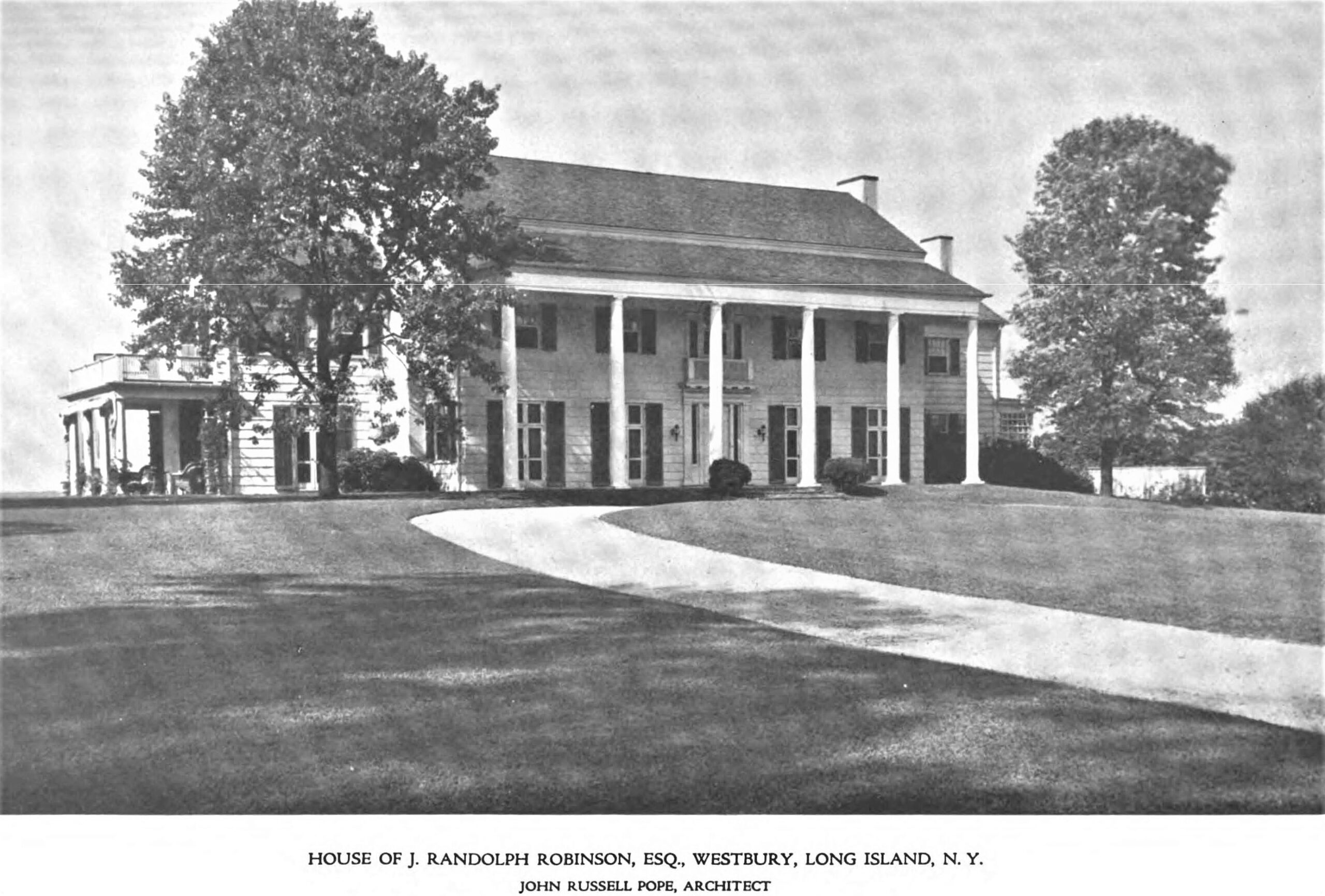
Wheatley Hills Estates
In the late nineteenth and early twentieth centuries, Wheatley Hills, now Old Westbury, became one of America's most exclusive summer enclaves. Grand estates owned by the Morgan, Pulitzer, Goodyear, Merritt, Rushmore, Lowe, Hutton, Okie, Pell, Robinson, Gossler, Vanderbilt, and Whitney families earned the area a reputation as Long Island's "Millionaires Colony." The region was also known for the celebrated fox hunts of the Meadow Brook Hunt Club. Long before the arrival of these Gilded Age estates, Indigenous peoples lived among the area's hills, woodlands, and ponds., shaping the landscape's earliest history
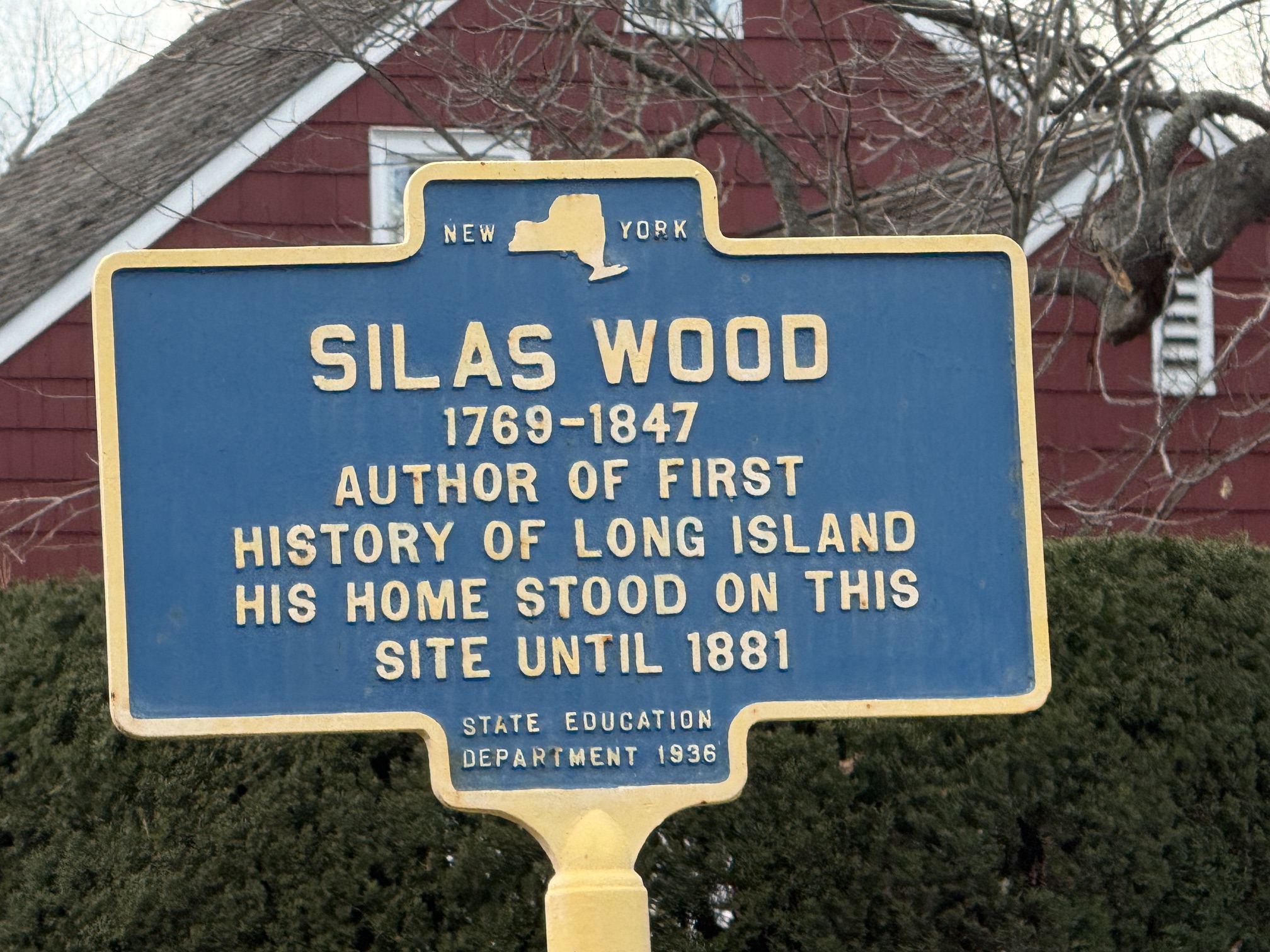
Historic L.I. Markers
One of the occupational hazards of being a historian is the inability to drive past a historical marker without wanting to photograph it. Unfortunately, many Long Island markers seem to have been placed along busy roads with little room to pull over. Veteran Long Islanders know the drill: flashers on, quick photo, and back on the road before anyone notices. Impatient drivers rarely honk. They simply steer around you and continue on their way. We may not qualify for the Indianapolis 500, but Long Islanders are born with a certain confidence behind the wheel. In the spirit of history, near misses, and taking my life into my own hands, I present this gallery of New York State Historical Markers that I have personally photographed throughout Nassau and Suffolk counties. This is just a small sample, with many more to come. For more information about New York State Historical Markers, visit the William G. Pomeroy Foundation.
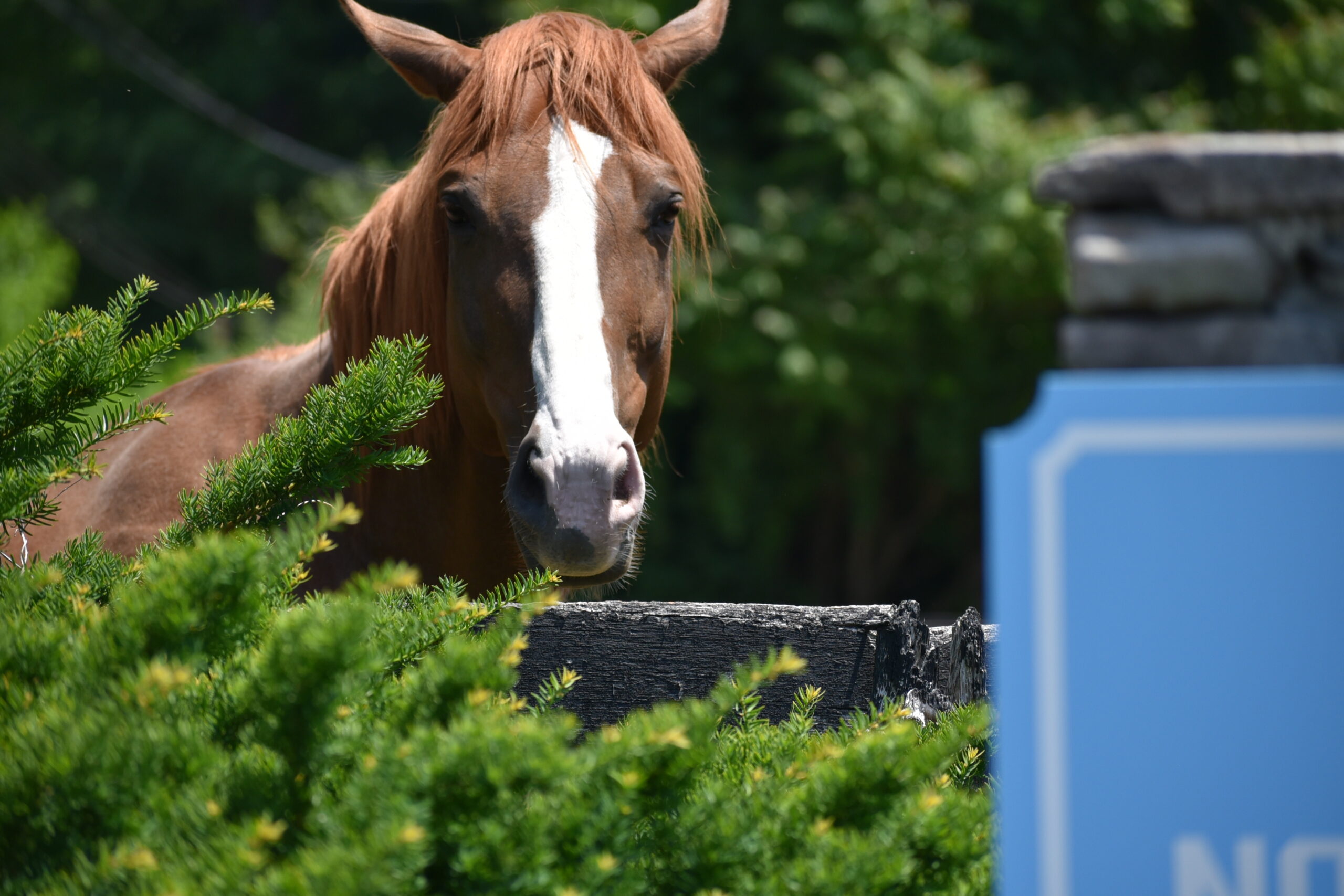
Horsing Around
Long Island's history is closely tied to horses. Long before suburban development transformed the landscape, horses powered farms, delivered goods, provided transportation, and served as companions for recreation and sport. For more than 30 years, I had the privilege of working on the former Gold Coast estate that became the C.W. Post Campus. From my office window, I regularly watched riders travel the historic bridle paths, horses graze in nearby paddocks, and members of the equestrian community continue a tradition that stretches back generations. I also had the opportunity to promote the North Shore Equestrian Center, chronicle the history of Wheatley Hills, and celebrate the accomplishments of the university's equestrian team. This collection explores some of Long Island's enduring connections to horses, the families who raised and rode them, and the communities that grew around them.
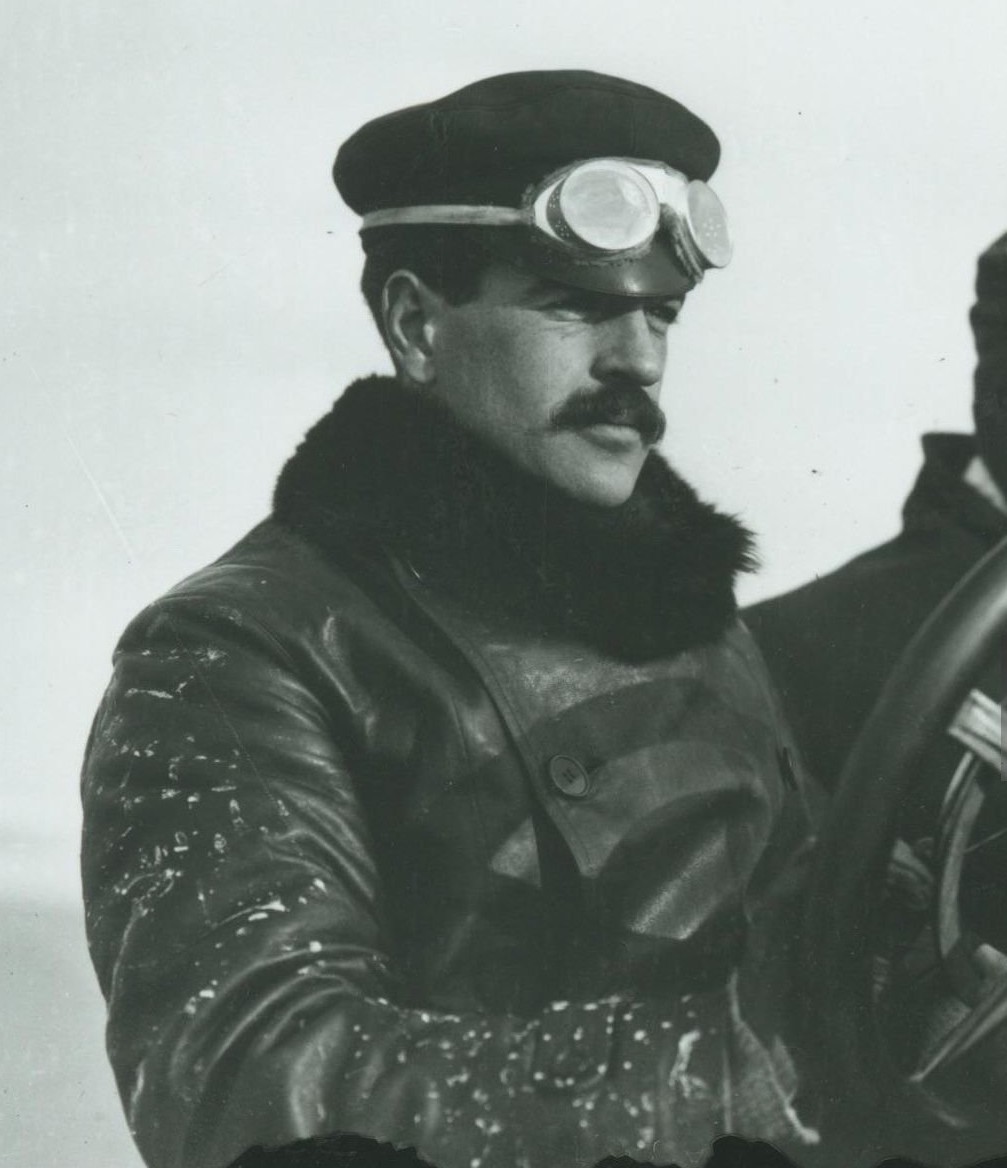
William "Willie" K. Vanderbilt II
Few individuals did more to popularize the automobile in America than William K. "Willie" Vanderbilt II. In 1904, he established the Vanderbilt Cup, the nation's first major international automobile race, bringing world-class drivers and enormous crowds to Long Island. His passion for automobiles later led to the construction of the Long Island Motor Parkway, one of America's first limited-access highways. As part of my ongoing research into real estate broker S. Osgood Pell and his friend Willie Vanderbilt, I continue to explore the people, places, and events that helped shape Long Island during the Gilded Age and early twentieth century. Stay tuned for the full story.
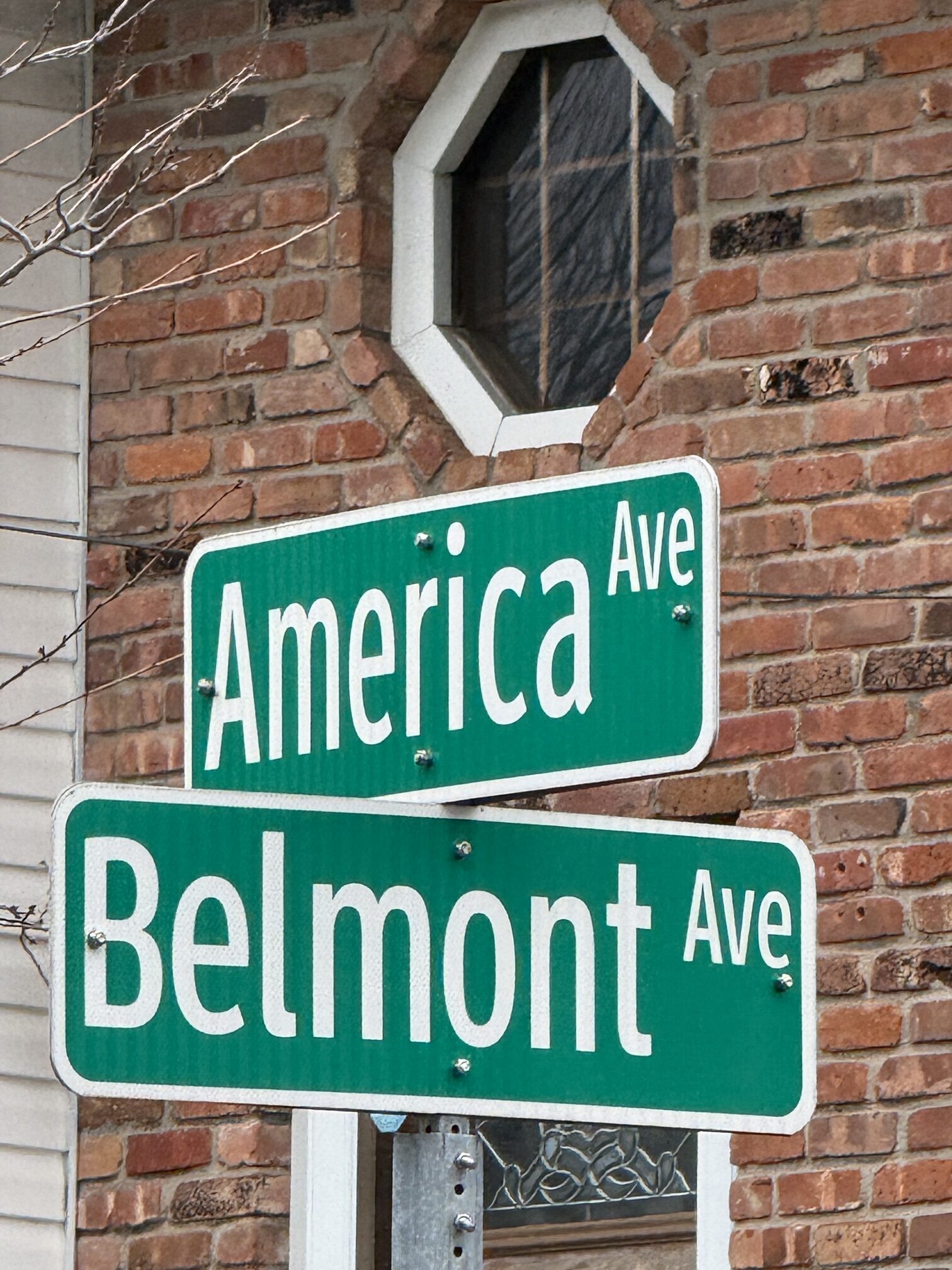
Street Signs: A Roadmap to Long Island's Past
One of the easiest ways to explore Long Island history is simply to read the street signs. Across Nassau and Suffolk counties, tens of thousands of roads, streets, avenues, lanes, drives, courts, and boulevards quietly preserve the people, places, and stories that shaped the region. Some are named for founding families and early settlers, including Carman Avenue, Smith Street, and even Langdon Place in Lynbrook and Langdon Street in Valley Stream. Others reflect Long Island's agricultural past through names such as Farmers Avenue, Prairie Drive, Colonial Springs Road, and Straight Path. Many streets honor presidents, including Washington Avenue, Jefferson Street, Lincoln Avenue, Harding Avenue, and Roosevelt Street. Others commemorate Native American communities and place names such as Massapequa, Mattituck, Tuckahoe, and Copiague. Some roads acknowledge Long Island's relationship with the sea through names like Ocean Avenue, Long Beach Road, Pacific Avenue, and Seacrest Avenue. Street signs are more than directions. They are a living archive, hiding in plain sight, reminding us every day of the people, landscapes, cultures, and communities that came before us.
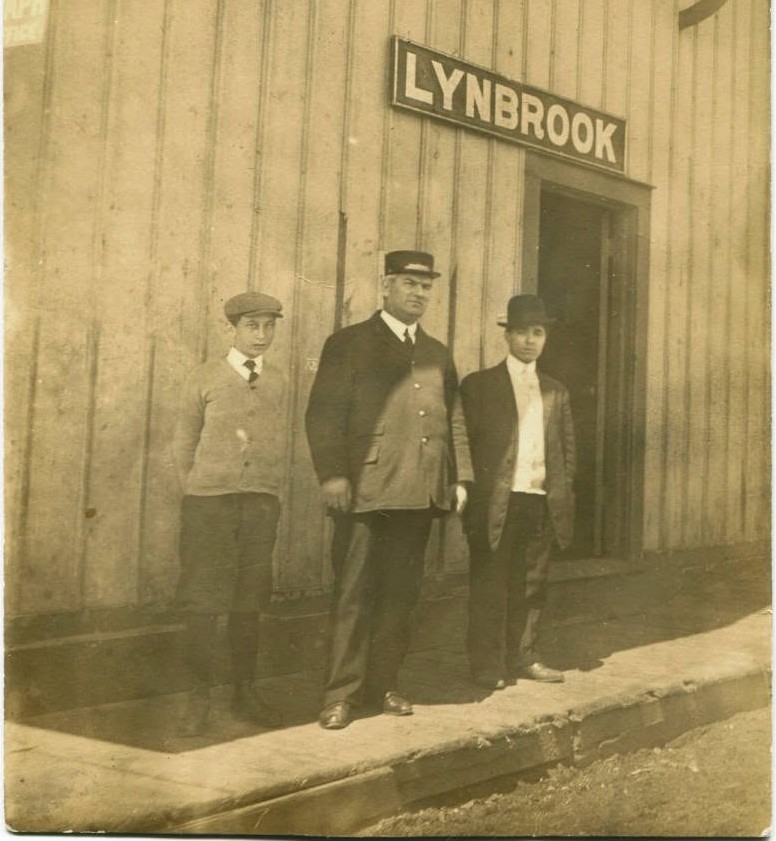
Lynbrook, New York
Once known as Pearsall's Corners in the Town of Hempstead, Lynbrook grew from a rural farming settlement into a vibrant Long Island village shaped by the arrival of the railroad and the growth of neighboring New York City. Incorporated in 1911, the village is home to generations of families whose stories are woven into the history of Long Island. Among them are the Langdons, whose roots in the Lynbrook area extend nearly 370 years to the earliest days of European settlement on Long Island. This collection explores Lynbrook's people, places, landmarks, institutions, and enduring community spirit.
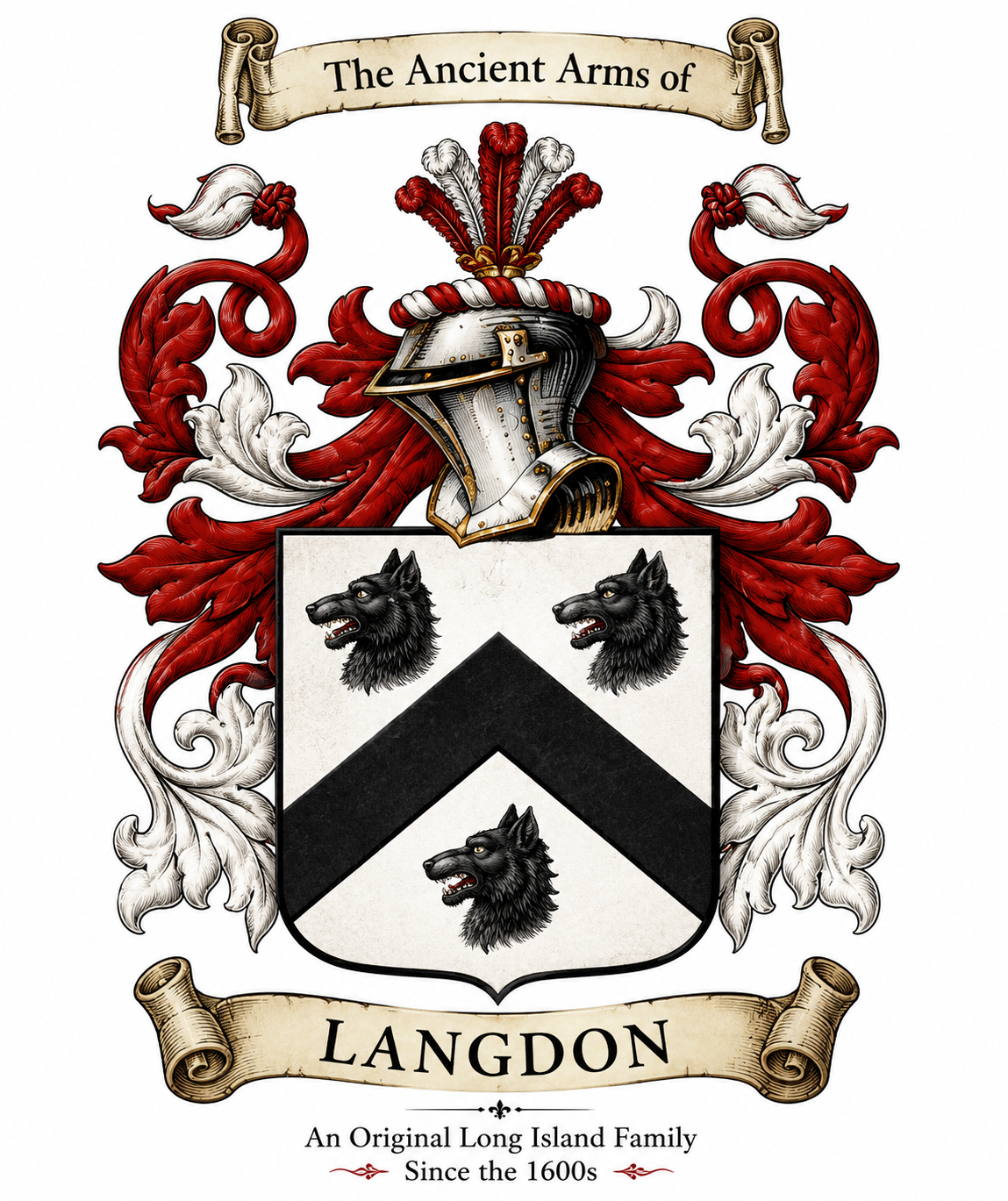
The Langdons: An Original Long Island Family
Descended from Thomas Langdon, who arrived on Long Island during the colonial era, the Langdon family has been part of the island's story for nearly four centuries. Farmers, merchants, church leaders, soldiers, public servants, and community builders, generations of Langdons witnessed and helped shape the transformation of Long Island from a frontier settlement to one of America's most dynamic regions. This collection brings together original research, family stories, historical records, maps, and discoveries that document the Langdon family's enduring connection to Long Island since the mid-seventeenth century. I am honored to continue that story as Thomas Langdon's tenth-generation great-granddaughter. Notice in the coat of arms, the three images of wolves. Thomas Langdon's profession was a wolf hunter in Colonial Connecticut, and later Long Island.

You Can't Make This Stuff Up
After decades of interviewing people, traveling, teaching, and researching, I've accumulated a remarkable assortment of true stories that are funny, baffling, heartwarming, and occasionally unbelievable. The world is full of fascinating people, curious sights, and moments that make you stop, smile, and exclaim, "Life really is stranger than fiction." I took this photo in Alsace, France. A woman was lining up her Chinese-crested dogs on a ledge outside a church for a photo.
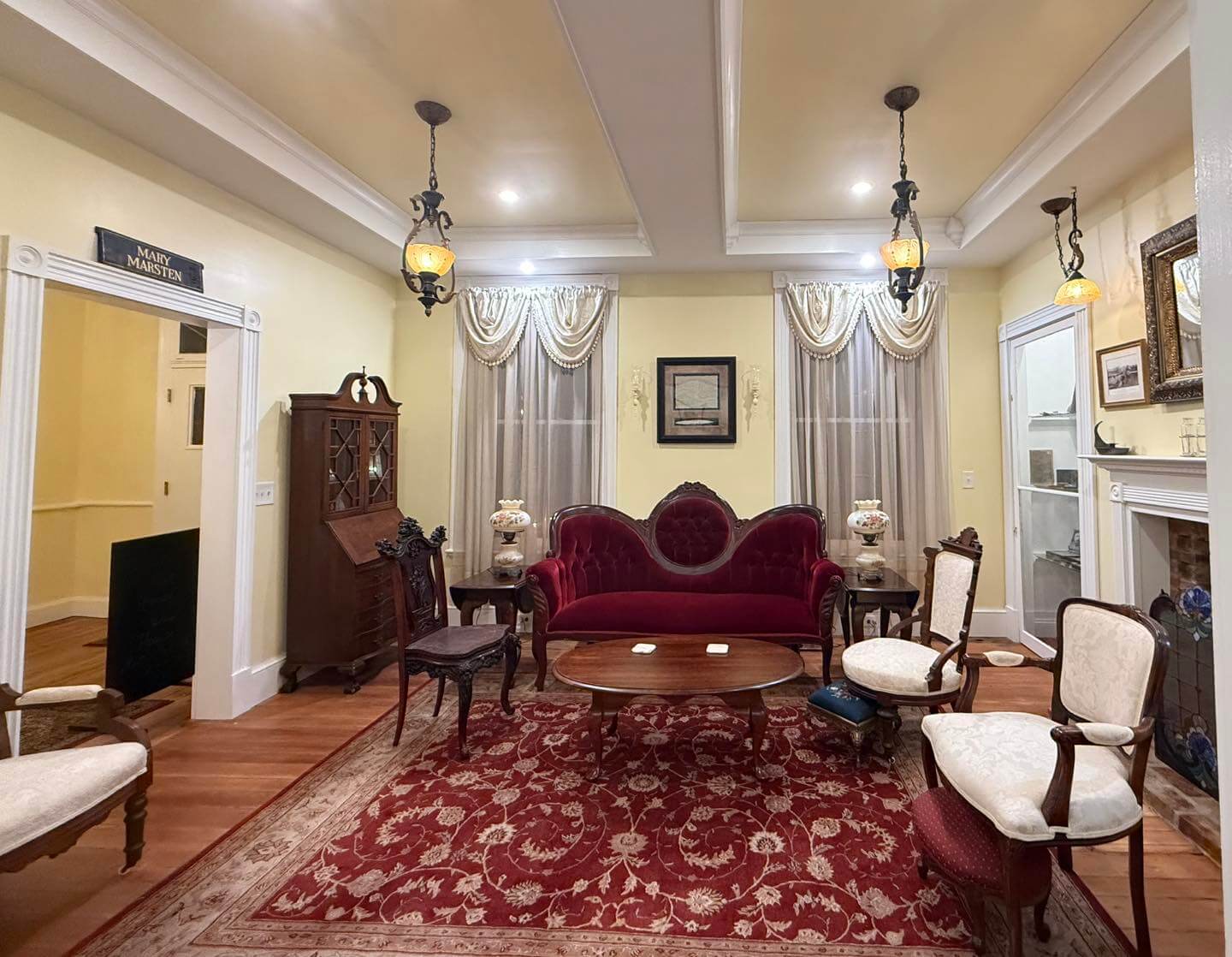
Langdon Hill House
Langdon Hill House is a bed and breakfast on Baltimore Street in Gettysburg, Pennsylvania. The fully restored home is run by my
brother, Ron Langdon, and his wife, a native of Long Island and today a Gettysburg historian, Laura Goldrick Langdon. Located within walking distance of the battlefield, this is an original civil war home offering four bedrooms, living room and parlor, and dining room. Visit LangdonHillHouse.com for more information.
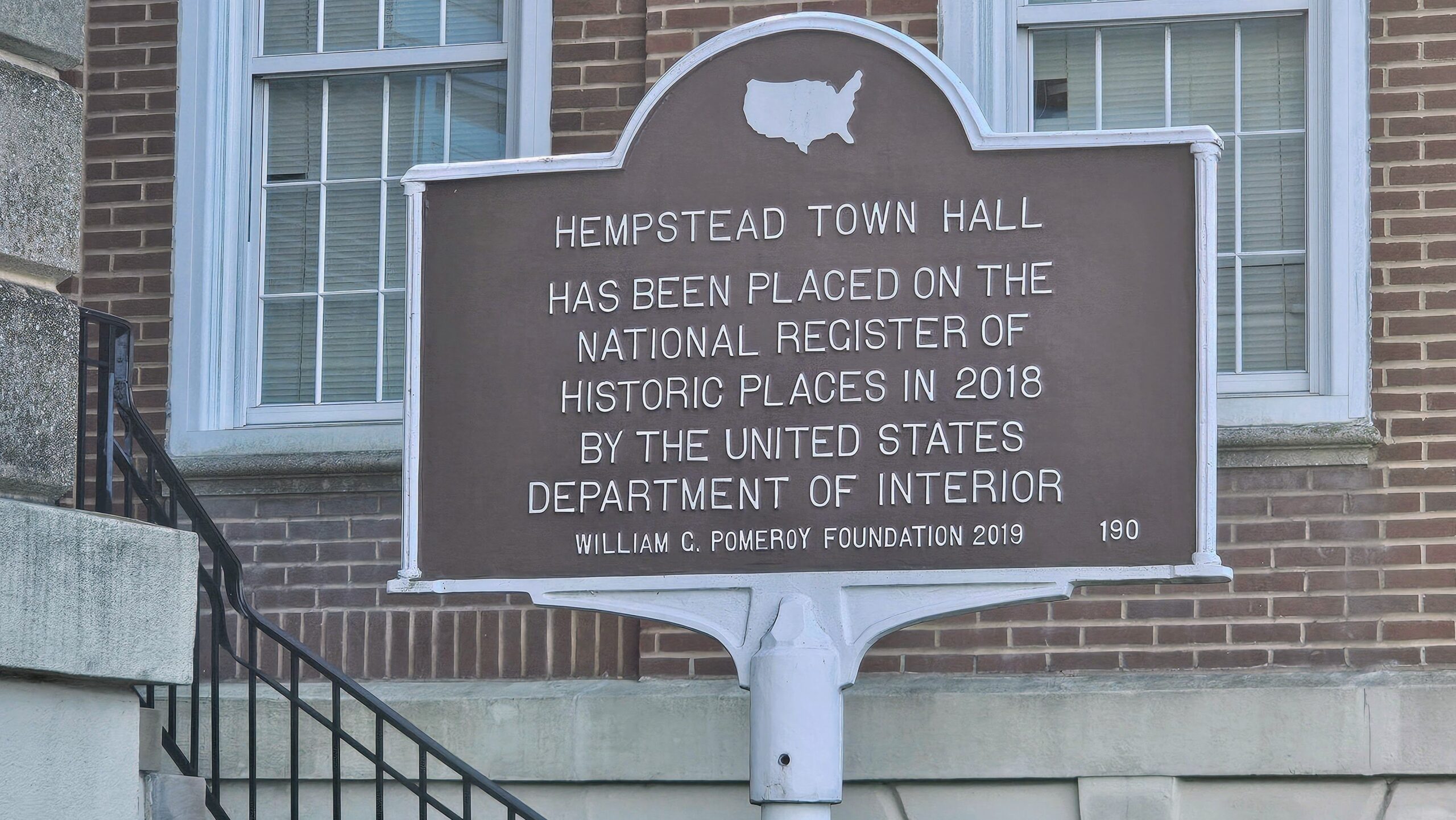
Town of Hempstead: Est. 1644
Founded in 1644 by English settlers, the Town of Hempstead is the oldest and largest township in Nassau County and one of the oldest municipalities in New York State. Established under a patent granted by the Dutch and later recognized by the English, Hempstead played a central role in the settlement and development of Long Island. From its beginnings as a small agricultural community, the town grew into a diverse region encompassing villages, hamlets, farms, businesses, railroads, and suburban neighborhoods. Today, the Town of Hempstead remains home to many of Long Island's oldest families, historic sites, churches, cemeteries, and landmarks, preserving a rich history that spans nearly four centuries.